
A better home starts here.
From extra living space to a garden you love, discover how we can help you make more of your property.
Home Extensions
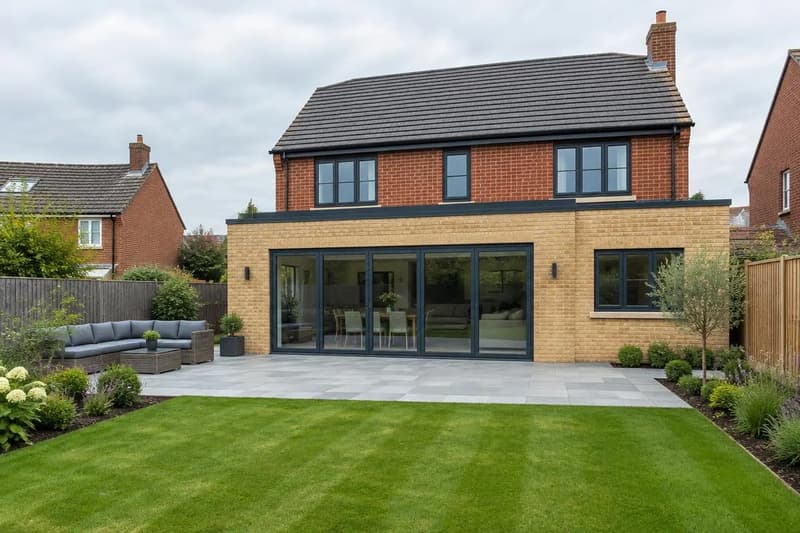
If your house needs more living space, an extension adds to the building rather than rearranging the garden. Rear and side additions can provide a kitchen, family room or bedroom. The connection to your original walls, roof and rooms matters as much as the new space itself.
Explore Home Extensions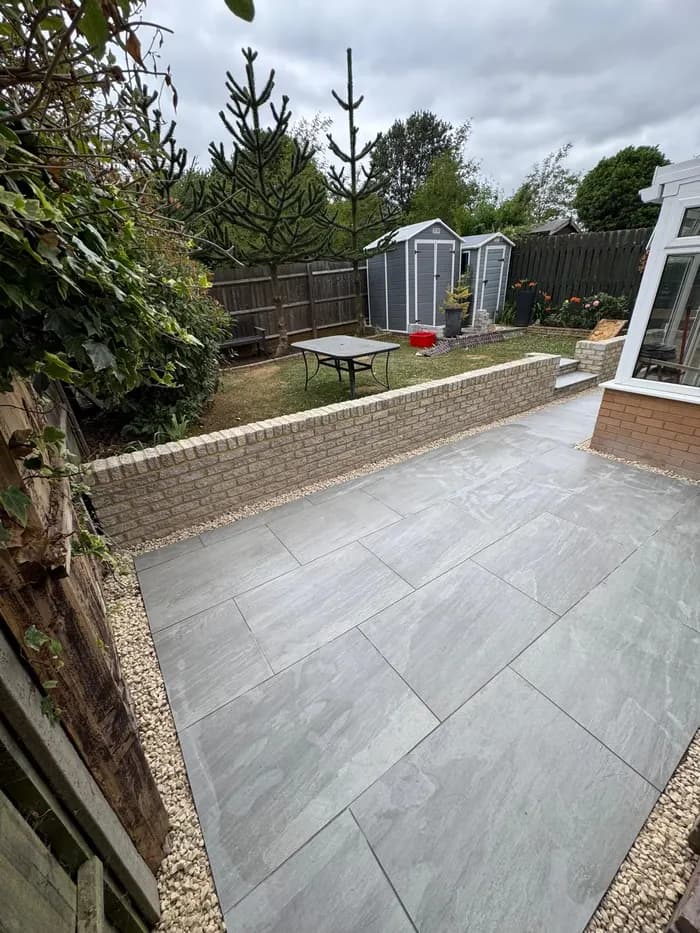
Garden Renovations
Choose a full renovation when several parts of the garden need changing together. Clearance, revised levels, seating areas, paths and lawns can be considered as a whole, instead of treating each corner as an unrelated job. Walls and drainage help establish the layout before the finishing work.
Explore Garden Renovations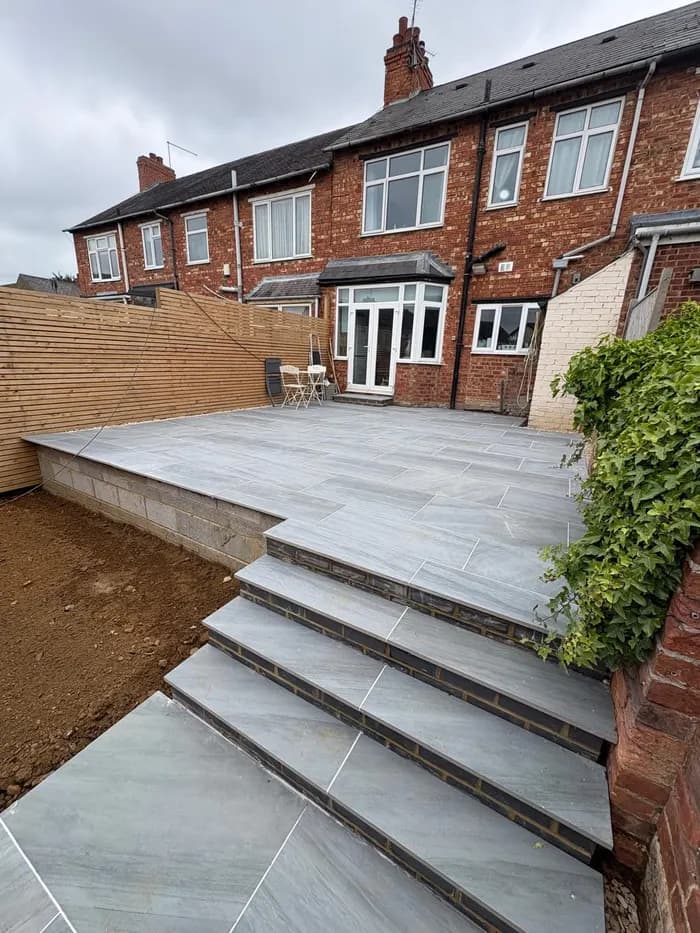
Patios
A dedicated patio project focuses on the paved area where you sit, eat or step outside. Material choice is only part of the decision: ground preparation, the height beside the house and the direction water flows all affect the finished surface. Steps and edging complete its connection to the garden.
Explore Patios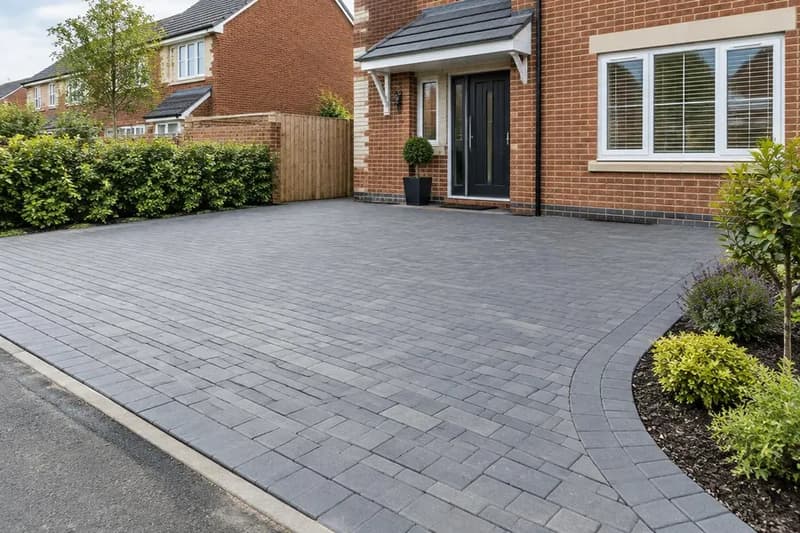
Driveways
For the front of your property, think about parking space and how people reach the entrance as well as the appearance of the paving. A driveway needs a suitable base for vehicles and a way to manage rainwater. George can discuss the layout and finish for your approach.
Explore Driveways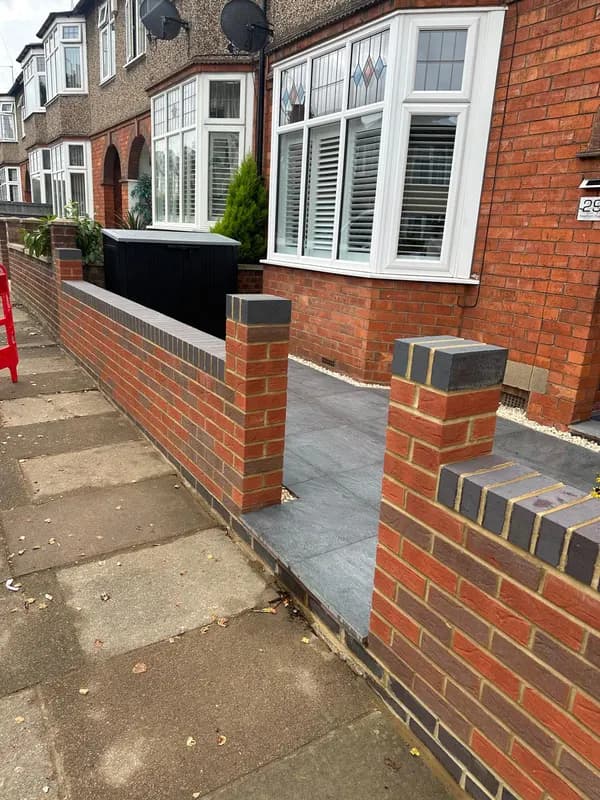
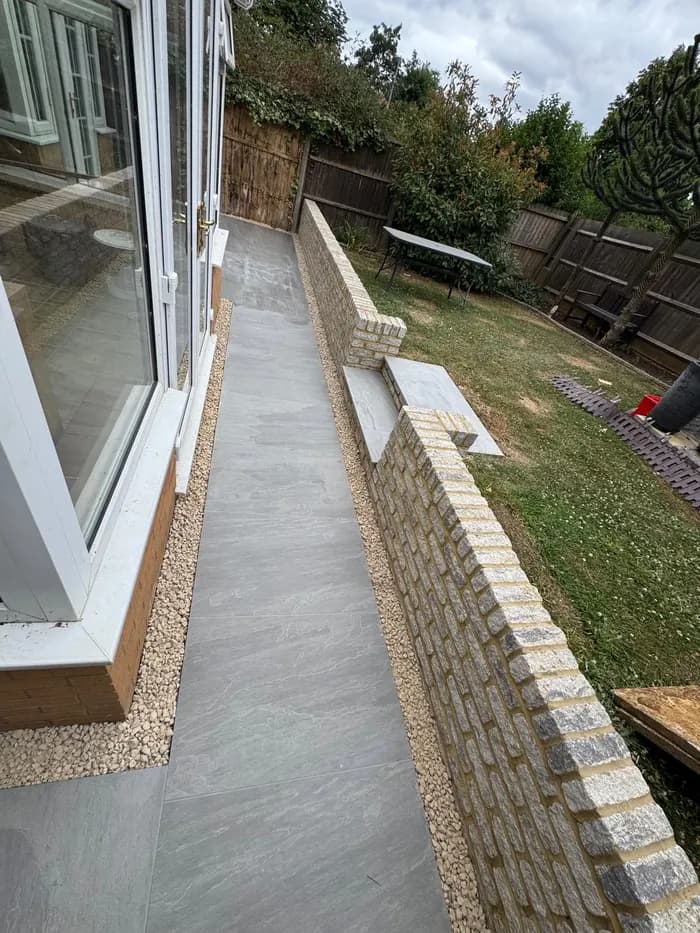
Brickwork & Garden Walls
Brickwork can be a standalone improvement or part of a bigger build. Boundary walls define the edge of a property; retaining walls support changes in garden level. The intended purpose, foundations and relationship to existing bricks help determine what is needed, rather than appearance alone.
Explore Brickwork & Garden WallsGarages
A new garage brings questions about vehicle size, storage and the space available beside your home. Its position and access need to work with the driveway, while the roof and masonry should sit comfortably alongside the house. Discuss the intended use before settling on the size of the building.
Explore Garages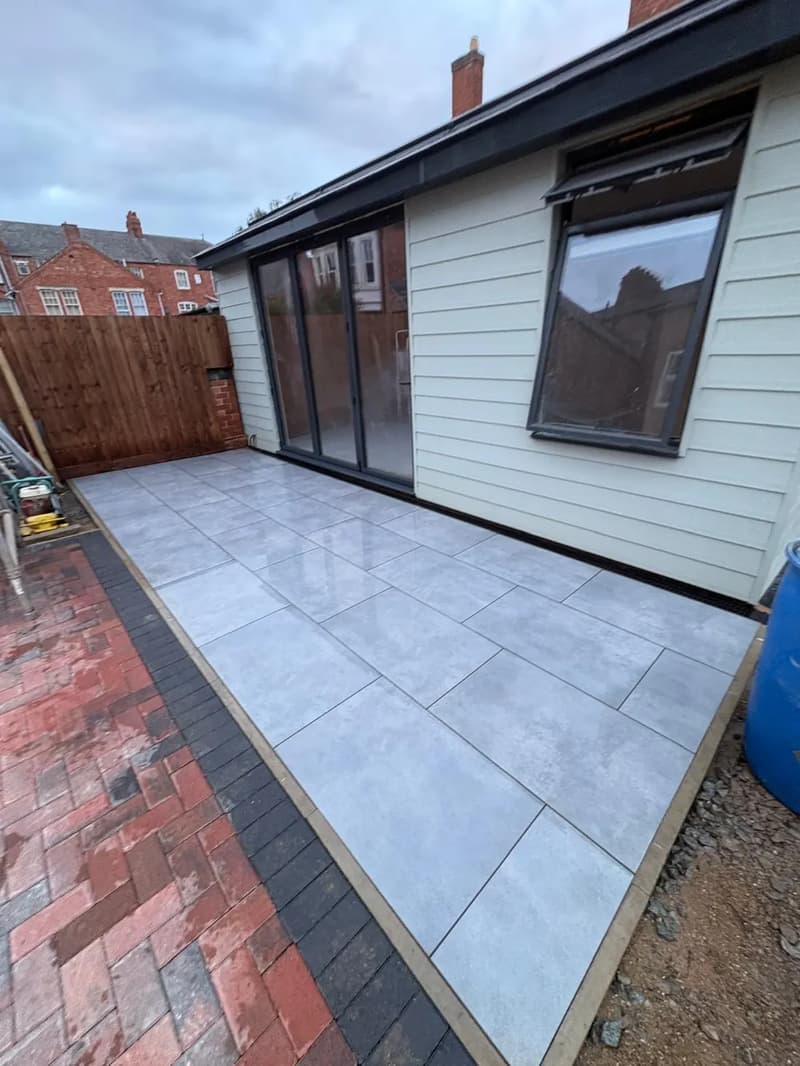
Landscaping
Landscaping connects the separate outdoor elements: routes between doors and outbuildings, lawn areas, borders, paving and changes of level. It suits projects where the garden's structure needs attention, whether or not every part is being replaced. Consider where you want to walk, sit and leave open space.
Explore LandscapingKitchen Extensions
A kitchen extension builds the space for cooking, eating and sitting together, usually at the back or side of the house where the garden can be seen and reached.
Explore Kitchen ExtensionsSingle Storey Extensions
A single storey extension adds ground-floor space at the rear or side, often for a kitchen, family room or utility.
Explore Single Storey ExtensionsSide & Wraparound Extensions
A side return extension fills the passage beside the house; a wraparound joins it to a rear extension in an L-shape.
Explore Side & Wraparound ExtensionsRaised Patios
A raised patio or terrace builds a level platform where the garden falls away from the house, with walls and steps to finish it.
Explore Raised PatiosSloping Garden Landscaping
Landscaping a sloping garden breaks the fall into level terraces held by retaining walls, joined by steps and paths.
Explore Sloping Garden LandscapingGarden Drainage
Garden drainage is about giving rainwater a route away from the house and off the surfaces you use, built in while the patio, path or garden is being laid.
Explore Garden DrainageTwo Storey Extensions
A two storey extension builds upwards as well as outwards, adding a bedroom or bathroom above a new kitchen or living room.
Explore Two Storey ExtensionsResin Driveways
Resin bound surfacing gives a seamless stone look that drains through, provided the layer underneath is sound and laid to suit it.
Explore Resin DrivewaysBlock Paving
Block paving is a flexible surface built from many small units, which makes it easy to lift and relay a section if the ground beneath ever needs attention.
Explore Block PavingPermeable Driveways
Permeable build-ups are one of the ways the site's existing driveway work deals with front garden drainage rules.
Explore Permeable DrivewaysDropped Kerbs
The site already explains that a dropped kerb needs separate approval from the council. This page explains how that fits around a new driveway.
Explore Dropped KerbsDriveway Repairs
Driveway repairs cover tarmac, resin, block paving and gravel surfaces that have sunk, cracked, rutted or loosened.
Explore Driveway RepairsPorcelain Patios
Porcelain paving is dense and very low in absorption, which makes it easy to clean but means it has to be laid differently from stone.
Explore Porcelain PatiosIndian Sandstone Patios
Natural stone such as sandstone or limestone is one of the paving types already described on our patio page.
Explore Indian Sandstone Patios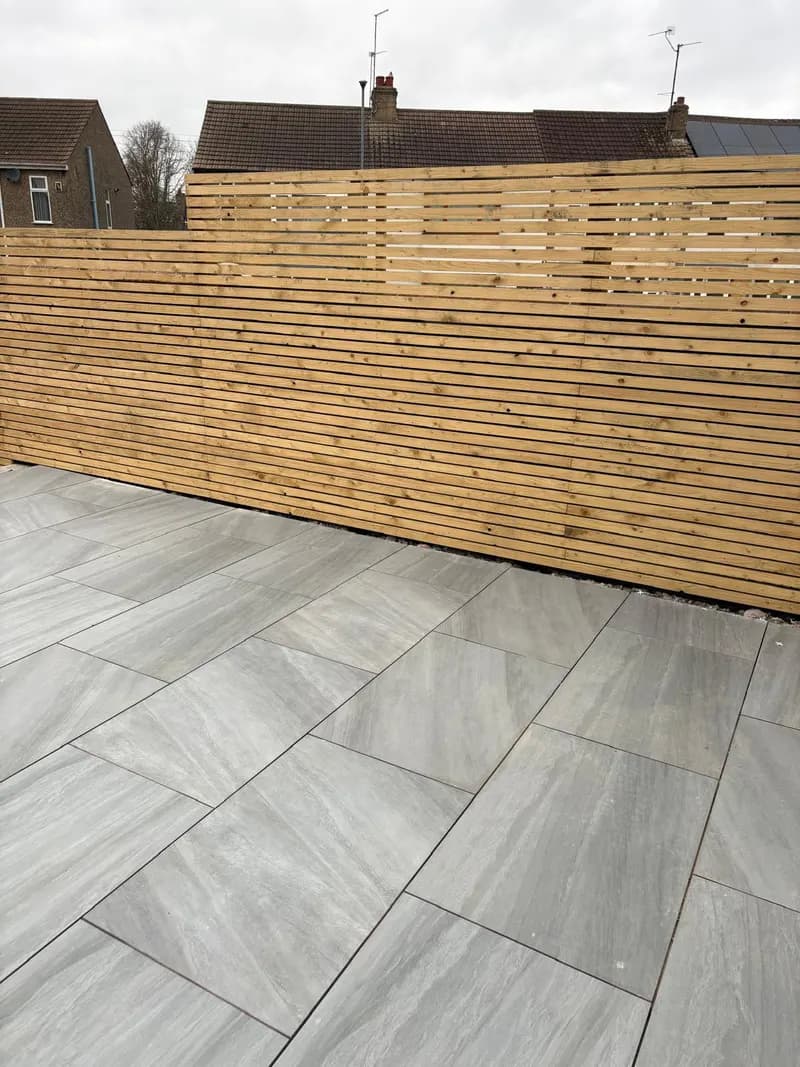
Fencing
Fencing marks the boundary, gives privacy and frames the rest of the garden, so it is worth building it to stand up to wind and wet ground for years.
Explore FencingGarden Walls
A well-built garden wall outlasts almost anything else in the garden, provided the footing, the damp detail and the coping are right.
Explore Garden WallsRetaining Walls
Retaining walls make sloping gardens usable, but they work harder than any other wall in the garden and must be built for that load.
Explore Retaining WallsArtificial Grass
Artificial grass removes mowing and muddy patches, but it needs the same careful groundwork as any other garden surface.
Explore Artificial GrassDecking
Decking gives a level outdoor floor without heavy groundwork, which makes it useful on uneven ground or where a patio would need a lot of digging.
Explore DeckingGarden Rooms & Outbuildings
A garden room gives you a separate space to work, exercise or store things without extending the house itself.
Explore Garden Rooms & OutbuildingsOrangeries
An orangery gives you a bright room that feels part of the house, with more brick and less glass than a conservatory so it stays usable through the year.
Explore OrangeriesGarage Conversions
Converting a garage adds a room without building outwards. It suits a home office, playroom, snug or bigger utility where the garage is mostly used for storage.
Explore Garage ConversionsPorches
A brick porch is a small building in its own right, so it needs footings, a damp-proof course and a roof that sheds water away from the house.
Explore PorchesGroundworks
Every extension, garage, driveway or garden building starts below ground. Groundworks cover the excavation, footings, bases and drainage that everything else sits on.
Explore Groundworks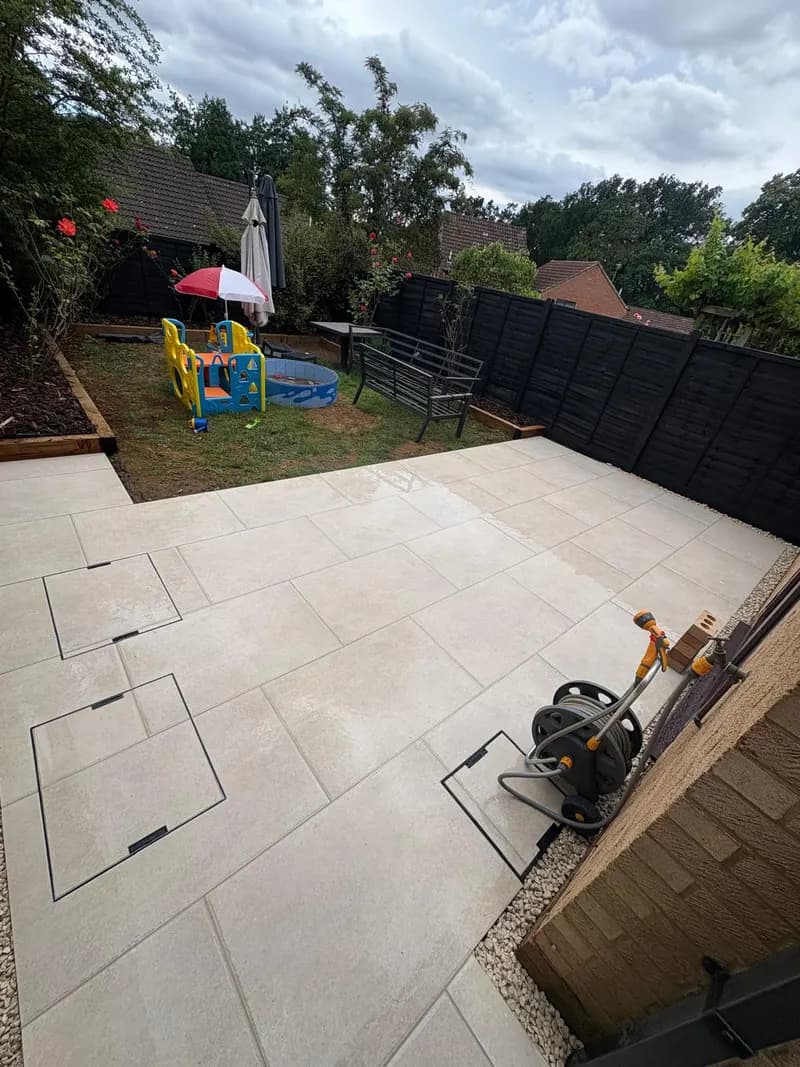
Garden Design
Design is the first stage of a landscaping build. It decides where the patio, paths, lawn and features go, and how levels and drainage work between them.
Explore Garden DesignTarmac Driveways
A tarmac drive is a practical choice for larger areas. The dig, sub-base, edging and drainage plan matter as much as the surface layer.
Explore Tarmac DrivewaysGravel Driveways
A gravel driveway is quick to drain and simple to extend, but it needs a solid sub-base and edging to stop stones spreading and ruts forming.
Explore Gravel DrivewaysSoakaways
Where there is no surface water drain, or a new patio or drive needs somewhere for water to go, a soakaway returns it to the ground on your own land.
Explore Soakaways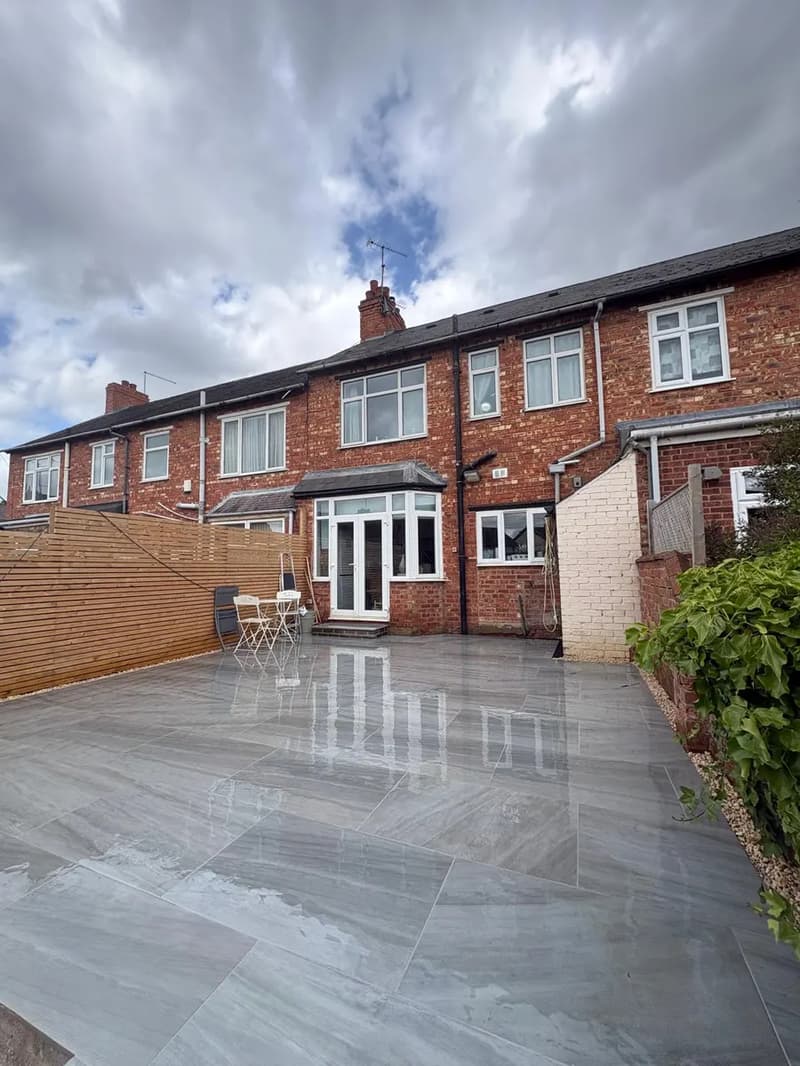
Patio Sealing
Patio sealing protects paving from stains and algae and can bring out the colour of natural stone. It is carried out as a one-off job, not an ongoing contract.
Explore Patio SealingTurfing
Turfing replaces a tired or patchy lawn with fresh rolls of grass. The ground preparation does most of the work in getting a flat, healthy lawn.
Explore TurfingRepointing
Mortar wears faster than brick. Repointing removes failing joints and refills them so walls shed water and loose bricks are held firm again.
Explore RepointingGarden Paths
Paths connect the back door to the patio, the shed, the bins and the end of the garden. The material sets the look; the base and edging decide how well it lasts.
Explore Garden PathsFlat Roof Extensions
Flat roofs suit many rear and side extensions. The roof build-up, edge detail and drainage decide how well it performs and how it looks.
Explore Flat Roof ExtensionsUtility Room and Garage Extensions
Side and rear extensions for garages and utility rooms take everyday clutter out of the kitchen and give cars, bikes and tools a proper home.
Explore Utility Room and Garage Extensions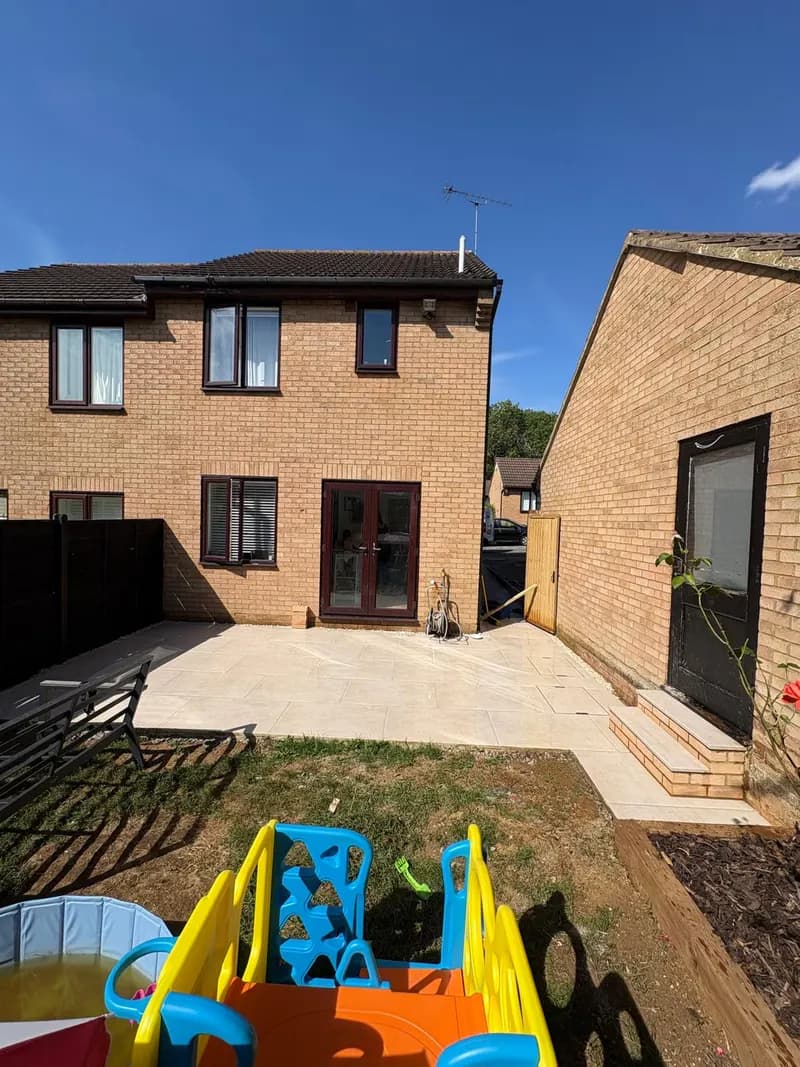
Outdoor Kitchens
Built outdoor kitchens are part of a landscaping project: a base, brick or block units, worktops and shelter, with any power or water planned early.
Explore Outdoor Kitchens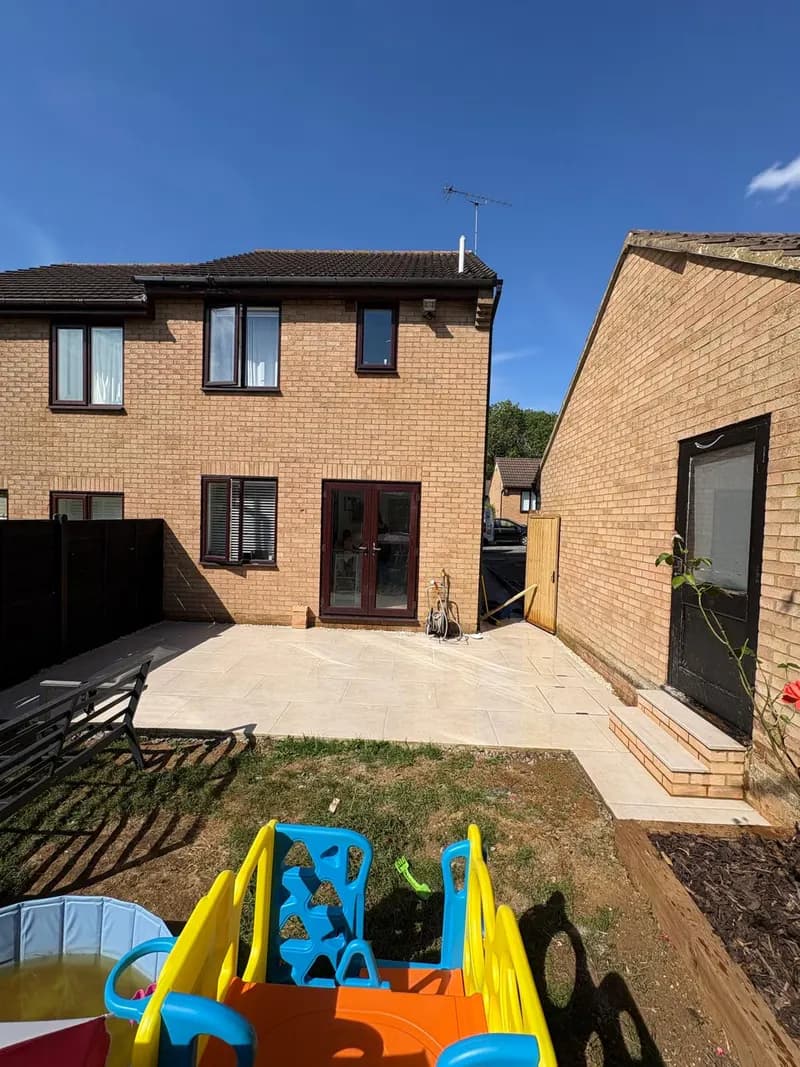
Pergolas
Pergolas are installed as part of a patio or garden build, with posts set on proper footings and the frame planned around paving, walls and views.
Explore PergolasFrom your first idea to completed work
Start by telling George which part of the property you want to improve and what you need it to do. Include your location and, if available, drawings or photographs. You do not need to pick a service label perfectly: a garden with new paving and walls may involve several of the services above.
Discuss the space and request a quote
The conversation covers your aims, the existing site and access for the work. For an extension, drawings and any necessary approvals help define the proposed build. For an outdoor project, levels, drainage and the relationship between different areas shape the plan. A quote needs to reflect that particular scope, rather than a price borrowed from another home.
Build in the right order
The sequence depends on the project. Foundations and drainage precede an extension's walls, roof and internal finish. In a garden, structural changes and heavy groundwork come before paving, edging and lawn finishing. Discuss the proposed work with George so the quote and the intended finished space describe the same project.
Talk through your project or view completed paving and work in progress .
Let's make it happen.
Tell George what you're planning and let's talk through the possibilities for your home.