
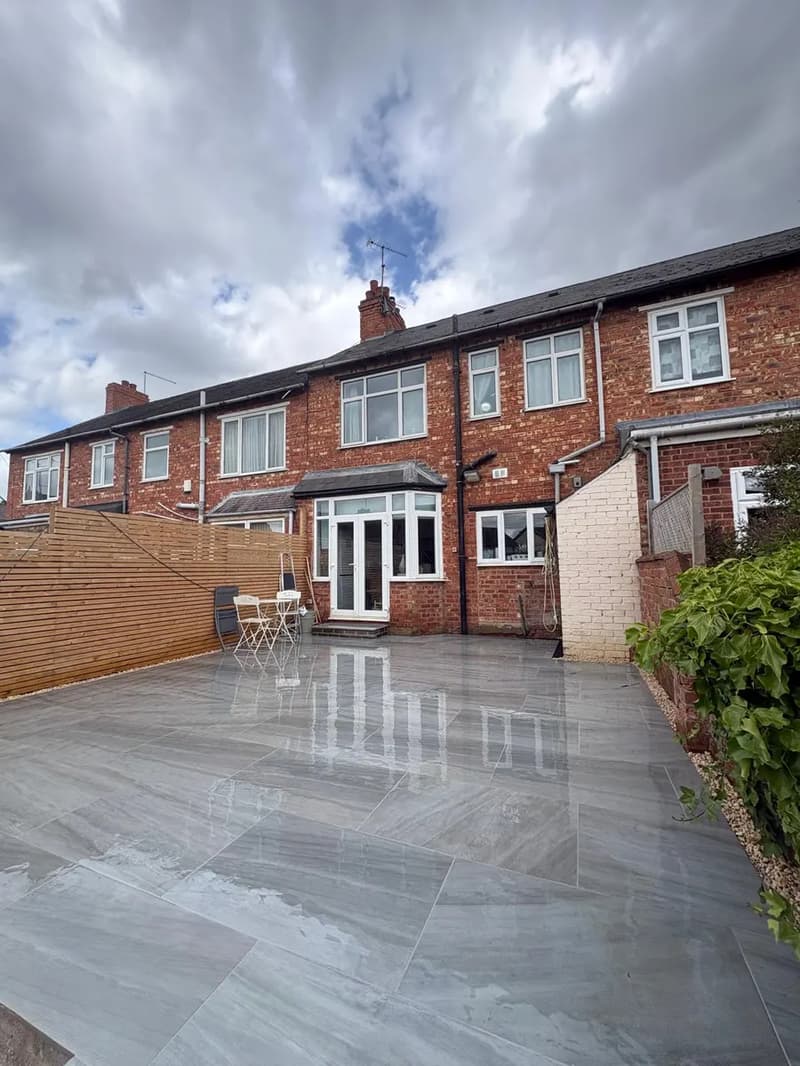
Why seal a patio?
Natural stone absorbs water, oil, wine and leaf tannins, which can leave dark marks that are hard to shift. A sealer reduces how much the stone takes in, so spills sit on the surface long enough to be wiped up. It can also slow the growth of green algae in shady corners and make routine sweeping and washing easier.
Some sealers simply protect, leaving the stone looking natural. Others deepen the colour, giving a slightly wet look that many people like on sandstone.
Sandstone and porcelain are different
Sandstone and other natural stones are porous, so they benefit most from sealing. Porcelain is very dense and absorbs almost no water, so the tiles themselves rarely need sealing. With porcelain, the joints are the weak point, and a joint sealer or a good jointing compound is often what matters. Our porcelain vs Indian sandstone guide compares the two in more detail.
Joints come first
There is no point sealing a patio with loose, cracked or missing joints. Water gets in underneath, weeds take hold and the seal is wasted. Before sealing, joints are checked and any that are failing are raked out and re-pointed. Loose or rocking slabs are lifted and re-bedded so the surface is sound.
How sealing is done
The patio must be clean and completely dry, because a sealer traps whatever is on or in the stone. After cleaning, the paving is left to dry, ideally for a couple of days of good weather. The sealer is then applied evenly, avoiding puddles, and left to cure without foot traffic or rain for the time the manufacturer specifies.
- Check and repair joints and loose slabs
- Clean the surface and remove stains where possible
- Allow the paving to dry fully
- Apply the chosen sealer evenly
- Keep the patio clear while it cures
Sealing a new patio
New natural stone often needs time before sealing so any moisture and salts from laying can come out. Sealing too early can trap these and cause a white bloom. The right timing depends on the stone and the weather.