
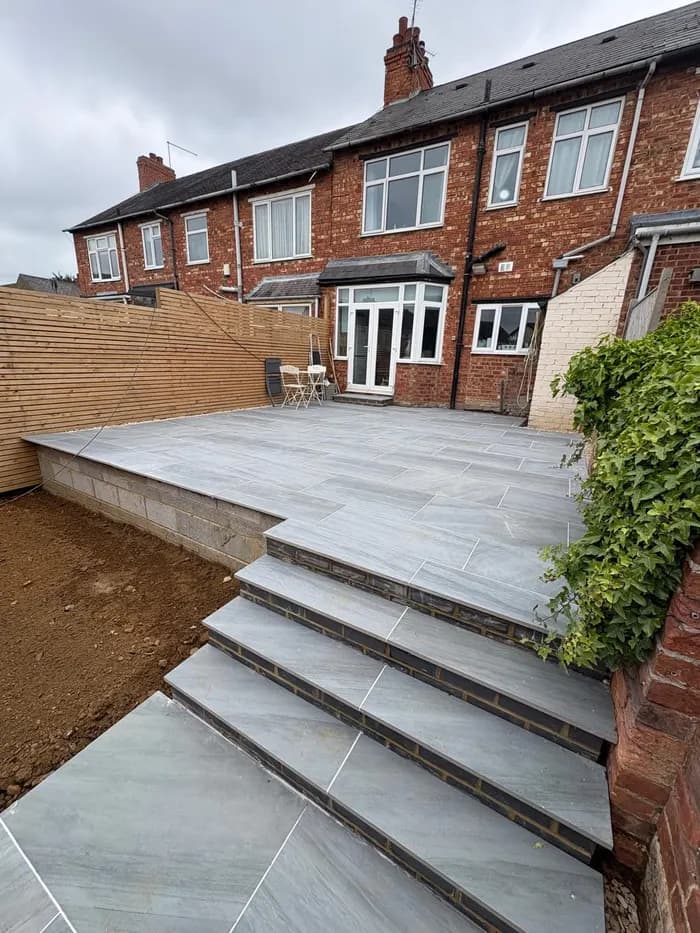
Why porcelain behaves differently
Porcelain is made by firing clay at very high temperatures, which leaves a dense slab that absorbs almost no water. That is what keeps it looking fresh, but it also means ordinary mortar has nothing to grip. A slab simply placed on wet mortar can look fine for a year, then lift away with a hollow sound when tapped.
The fix is a priming slurry painted onto the back of every slab just before it goes down, and a full bed of mortar beneath it, with no voids. Spot bedding, where slabs sit on a few dabs, leaves gaps that collect water and lets slabs crack under a point load.
Cutting and finishing
Porcelain is hard, so cuts need a proper diamond blade and patience. Clean, square cuts around drains, steps and walls make a big difference to how the finished patio looks. Many porcelain ranges come with matching step treads and bullnose edges, which help a raised patio look finished.
Joints are usually filled with a slurry or brush-in compound designed for porcelain. Because the slabs are so regular, joints can be kept narrow and even, which suits a contemporary look.
- Base dug out and compacted in layers
- Primer or bonding slurry on every slab
- Full mortar bed, no spot bedding
- Clean diamond-blade cuts
- Joints filled with a compound suited to porcelain
Falls and drainage
Water runs off porcelain quickly, so the fall and the outlet matter even more than on porous stone. The surface needs a steady slope away from the house and must sit below the damp-proof course. Where a patio meets doors with little height difference, a channel drain catches the run-off. Our guide to patio drainage and falls explains how much slope is needed and where the water should go.
Grip and safety
Outdoor porcelain should have a textured finish rated for external use. Smooth indoor tiles become dangerous when wet. If the patio is in a shady spot where algae grows, choosing a grippier texture and keeping the surface clean both help.
Porcelain or natural stone?
Porcelain gives a uniform, modern finish. Natural stone gives variation and character that can suit older houses better. If you are torn, our Indian sandstone patios page explains the stone option, and the porcelain vs Indian sandstone guide compares them side by side. The patio cost guide covers what moves the price of each. When you are ready, ask for a quote through the contact page.
Protecting the joints
Porcelain tiles rarely need sealing, but the joints can. Our patio sealing page explains the difference.