
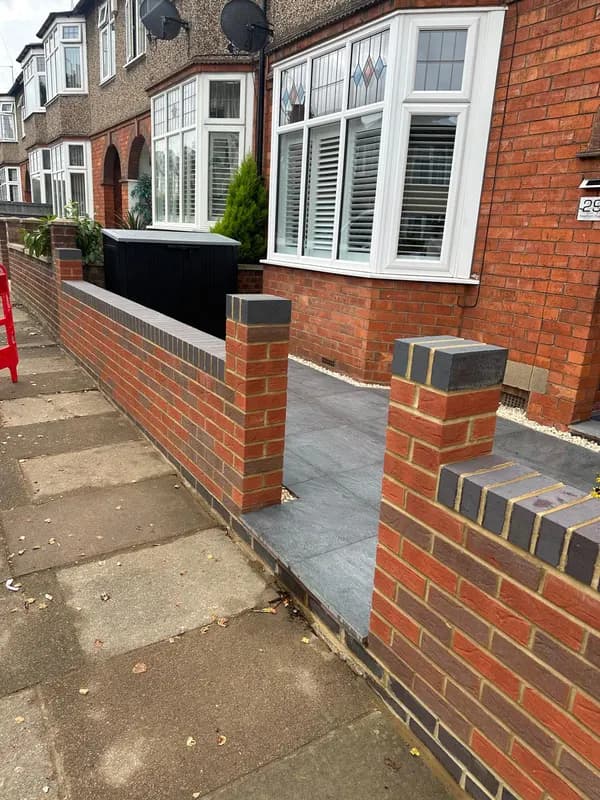
When does brickwork need repointing?
Mortar is designed to be softer than brick so it wears first and can be renewed. Signs that joints need attention include mortar that crumbles when you scrape it, joints recessed well behind the brick face, gaps you can push a key into, plants growing from the wall and damp patches inside behind the affected area. Garden walls, chimneys and parapets usually go first because they are exposed on more sides.
Choosing the right mortar
Modern cement mortar is hard and fairly waterproof. It suits modern bricks but can damage older, softer ones. Many older houses in the county were built with lime mortar, which lets the wall breathe and moves slightly with the seasons. Repointing these walls in hard cement traps moisture in the brick, and frost can then crack the faces off.
For older properties, a lime-based mortar is usually the right choice. The colour and texture of the sand are also matched so new joints blend in rather than standing out as stripes.
Repointing loose bricks
Where bricks have come loose, simply pointing around them does not fix the problem. Each loose brick is taken out, the old mortar cleaned off, and the brick re-bedded in fresh mortar before the joints are finished. Cracked or badly frost-damaged bricks can be replaced with a close match. If a wall is leaning or bulging, it may need rebuilding rather than repointing, which our garden walls page covers for boundary walls.
How the work is done
The old mortar is raked out to a consistent depth, usually around twice the joint height, without chipping the brick edges. Joints are brushed clean and dampened, then packed with mortar in layers. Once firm, the joints are finished in a profile to suit the building, such as flush, bucket handle or weatherstruck, and the face is brushed clean.
- Rake out failed mortar to a sound depth
- Brush out dust and dampen the joints
- Re-bed or replace loose bricks
- Pack the joints with matched mortar
- Tool the joint profile and clean the face
How long does repointing take?
It depends on the area, the state of the joints, access and the weather. A short garden wall or a small patch can often be done in a day or two. A full house elevation takes considerably longer, especially if scaffolding is needed. Lime mortar also needs protecting from frost, sun and rain while it cures, so timing matters.
Costs
Price depends on the area, height and access, the mortar type, how much raking out is needed and whether bricks need replacing. Our repointing cost guide explains each factor.