
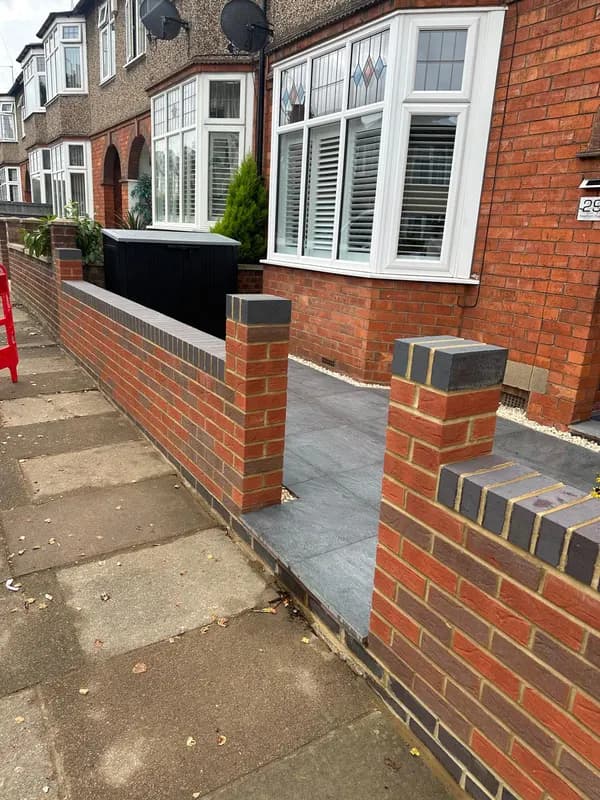
Garden and boundary walls
A garden wall marks a boundary, adds privacy or separates a patio from the lawn. Height, thickness and the type of brick all depend on what the wall needs to do. Freestanding walls taller than knee height need piers or a thicker construction to stay stable in the wind, and a good coping on top keeps rain out of the brickwork so it does not stain or crack in frost.
Front boundary walls are especially visible, so we pay attention to bond pattern, joint finish and matching existing walls on the street.
Retaining walls
A retaining wall holds back soil where the ground changes level, which is common when creating a flat patio in a sloping garden. These walls carry real loads, especially when the soil is wet. They need a solid concrete foundation, enough thickness for the height retained, and drainage behind so water can escape instead of pushing the wall over.
- Concrete foundation sized for the wall
- Drainage stone and weep holes behind the wall
- Copings or capping to shed water
- Steps built in where paths cross levels
Pillars, planters and features
Brick pillars frame a driveway entrance or carry gates. Raised planters bring borders up to a comfortable height and can double as seating around a patio. Built-in barbecue areas, bin stores and low dividing walls are other small projects that make a big difference to how a garden feels.
Repairs and additions
Not every job is new. Walls lean after years of root growth, frost damage loosens bricks, or a car clips a pillar. We can rebuild damaged sections, reset copings and extend existing walls, aiming to match the original as closely as possible so repairs do not stand out.
Brickwork on larger builds
On extensions and garages, the external brickwork is what everyone sees. Matching brick colour, mortar shade and bond to the existing house is what makes a new structure look like part of the original property. George has 11 years of trading behind him, the business is insured, and work is backed by a 10-year guarantee.
Choosing bricks and mortar
Brick choice changes the character of a wall more than almost anything else. Red multi bricks suit many older Northamptonshire homes, while smoother, more uniform bricks look at home on newer properties. The mortar colour and the way joints are finished, whether bucket-handle, flush or recessed, also make a noticeable difference. For walls that are exposed to weather or soil, frost-resistant bricks are essential, and we will explain why when you are choosing.
If you are not sure what you want, it helps to point us to a wall you like nearby, or to photos, so we can talk through how to get a similar finish.
How long brickwork takes
The time a wall takes depends on its length, height and how much ground preparation is needed first. Foundations must be dug and concrete left to cure before bricks are laid, and mortar needs settled weather to set properly, so very cold or wet spells can pause work. We will give you an honest idea of timing at the visit and keep you informed if the weather changes the plan.
Garden walls and retaining walls
For freestanding boundary walls, patio walls and planters, see garden walls. Walls that hold back soil on a slope are covered on retaining walls, and our repointing cost guide explains what affects the price of repointing brickwork.
Repointing
For worn or crumbling mortar joints, including lime mortar on older houses, see our repointing page.