
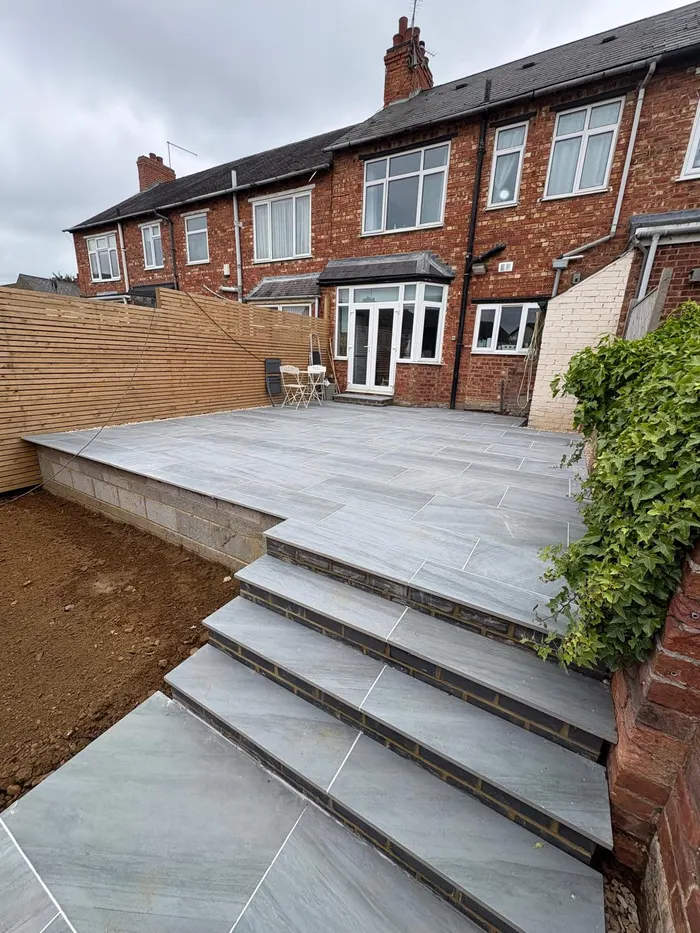
Choosing the paving
The slab you pick affects the look, the feel underfoot and how much cleaning the patio needs. Porcelain gives a crisp, modern finish and resists staining. Natural stone such as sandstone or limestone has variation in colour and texture that suits older houses. Concrete-based slabs are another option. We can talk through the samples you like and how each behaves in a north-facing or shaded garden, where algae is more likely.
Size and pattern matter too. Large-format slabs make a space feel calm and open, while mixed sizes laid in a random pattern can hide small level changes and suit a cottage-style garden.
The sub-base: what you do not see
Most patio problems, such as rocking slabs, sinking corners and puddles, come from poor preparation. The ground is dug out to the right depth, soft spots are removed, and a compacted layer of crushed stone is built up in stages. The slabs are then bedded on a full mortar bed rather than a few dabs, which is what stops them working loose over time.
Levels, falls and drainage
A patio should never be perfectly flat. It needs a gentle fall so rain runs away from the house, and the finished surface must sit below the damp-proof course of your walls. Where the patio meets the house, or where water would otherwise collect, a channel drain or a soakaway can be added. In a sloping garden that may mean a raised patio with a retaining wall and steps, like several in our gallery.
- Fall away from the house walls
- Finished level kept below the damp-proof course
- Drainage channels where water collects
- Steps and retaining walls for changes in level
Edging, steps and finishing
The edge of a patio holds it in place and frames it. We can finish with a brick soldier course, matching kerbs or a low wall, and build steps in the same paving so the whole area reads as one. Joints are filled once the bed has set, giving a neat, weather-resistant finish.
Part of a bigger plan
A new patio is often the first step in reworking a whole garden, so it is worth thinking about where paths, lawns and walls will go later. Our patio cost guide explains what makes one quote higher than another, and our garden renovations page covers the full-garden approach.
Looking after a new patio
Once the joints have cured, a patio needs very little attention. An occasional sweep, clearing leaves before they stain and a gentle wash in spring keep most paving looking fresh. Avoid harsh pressure washing close to the joints, and keep soil from beds and pots off the surface, as it encourages weeds and moss. Shaded gardens benefit from a periodic clean to stop green growth getting a hold, and we can advise on what suits the paving you choose.
Sizing a patio properly
Patios are very often built too small. A dining table with chairs pulled out needs more room than people expect, and a separate lounging area or barbecue needs space of its own. Marking the outline on the lawn with string, then standing in it with your garden furniture, is a simple way to test the size before anything is dug. Think about where the sun falls at the times you use the garden most, and whether part of the patio should sit further from the house to catch evening light.