
Choosing a material
The right material depends on how the path is used and the look of the rest of the garden. A main route that takes a wheelbarrow or bins every week needs a firm, even surface. A path to a quiet corner can be more informal.
- Paving slabs in porcelain, natural stone or concrete
- Gravel held between solid edging
- Brick or block laid in a pattern
- Stepping stones set into lawn or gravel
Paving and brick paths
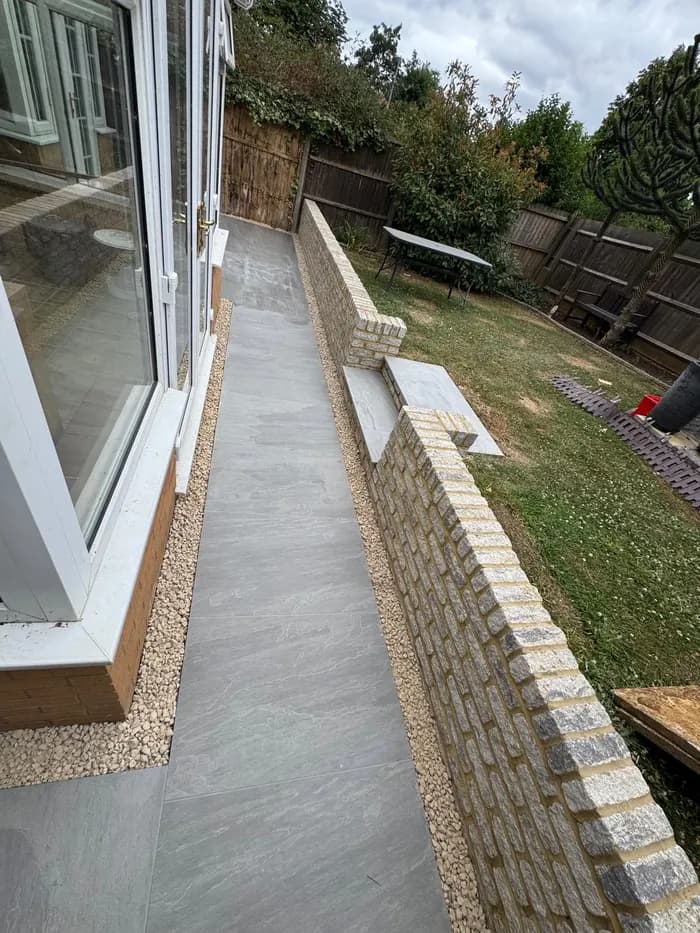
Paving and brick give a clean, solid surface that is easy to sweep and safe in all weathers. Matching the paving to a nearby patio makes the garden feel planned as one. Brick paths suit cottage-style gardens and older houses, and can be laid in herringbone, basketweave or stretcher bond.
Gravel paths and stepping stones
Gravel paths drain freely and cost less in materials, but need solid edges so stones do not wander into lawns and beds. A membrane and compacted base underneath stop weeds and keep the surface firm. The same build-up principles used for gravel driveways apply on a smaller scale. Stepping stones are best set slightly below lawn level so a mower can pass over them.
Edging and drainage
Edging holds a path's shape and stops the surface spreading. Brick, metal or concrete edging set in concrete is far more durable than timber, which rots. Paths should have a slight cross-fall so water runs off one side into a bed or lawn. Where a path passes close to the house, it must sit below the damp-proof course and fall away from the wall.
Paths on sloping ground
On a slope, a path may need steps, a gentle ramp or a series of short level runs. Steps should have even risers and treads so they feel natural to walk. Our garden steps guide explains sizing, and the sloping garden landscaping page covers terraces and walls on steeper plots.
Width and layout
A path that is too narrow feels awkward and gets ignored in favour of cutting across the lawn. Allow enough width for two people side by side on main routes, or for a barrow and bins on service paths. Gentle curves often feel more natural than straight lines in larger gardens, while straight paths suit smaller, formal spaces.