
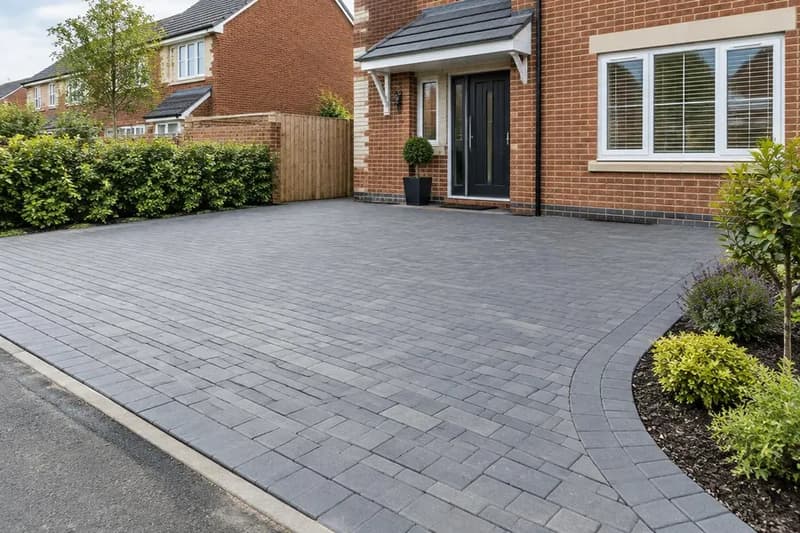
How a tarmac drive is built
Tarmac is usually laid in layers. A sub-base of crushed stone is spread and compacted in stages, then a base course of coarser tarmac is laid, followed by a finer surface course that is rolled smooth. Each layer has to be laid while hot and compacted before it cools, so the work needs good weather and steady organisation.
- Dig out to the depth needed for the base
- Lay and compact the crushed stone sub-base
- Set kerbs or block edging in concrete
- Lay and roll the base course
- Lay and roll the finished surface course
Edging matters
Tarmac has no strength at its edges on its own. Without a solid edge, the surface crumbles and spreads where wheels run near the side. Concrete kerbs, a row of block paving or brick set in concrete hold the edge in place and give the drive a clean outline against the lawn or path.
Drainage and planning
Standard tarmac is not permeable, so rainwater runs off it. In England, a new or replaced hard surface over five square metres in a front garden needs planning permission unless water drains to a lawn, border or soakaway on your property, or a permeable surface is used. Our driveway planning permission guide explains the rules. Channel drains or falls towards a planted area are common ways to deal with run-off.
Imprinted concrete as an alternative
Imprinted concrete is a poured slab pressed with a pattern while it sets, then coloured and sealed to look like brick or stone. It gives a one-piece surface with no loose stones, but cracks can be hard to repair invisibly and it also needs drainage planned around it. Other options include block paving and resin driveways, each with a different look and build-up.
Existing tarmac drives
Where an old tarmac drive has sunk, cracked or broken up at the edges, the cause is usually the base. Patching the surface may help for a while, but lasting results need the failed area dug out and rebuilt. Our driveway repairs page covers when a repair makes sense and when replacement is better.
Costs
Size, dig depth, spoil removal, edging, drainage and access all affect the price. Our driveway cost guide explains each factor without guesswork figures.