
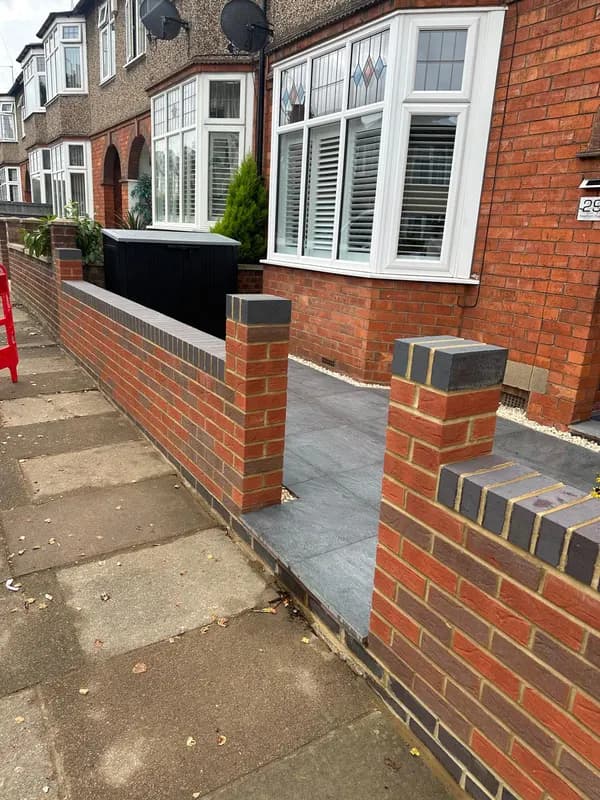
Boundary walls
A boundary wall at the front sets the tone for the whole house. Low walls with pillars at the drive entrance are a common choice, and our gallery shows new brick boundary walls and pillars finished with front paving. Brick colour and mortar make a big difference here, because the wall sits right beside the house and should look as though it belongs to it.
Higher boundary walls between back gardens give lasting privacy, but height matters. Walls beside a road or above a certain height can need permission, and a tall freestanding wall needs a thicker build or piers to stay stable. If in doubt, check with your council before building.
Patio walls and brick planters
Low walls around a patio frame the seating area, double as extra seats and stop soil washing onto the paving. A brick planter brings the borders up to a height that is easy to tend and gives the garden structure all year round. Planters need weep holes or a gravel layer at the base so water can escape, otherwise the soil stays wet and pushes on the brick through winter.
- Low patio walls and seating walls
- Raised brick planters
- Pillars at gates and drive entrances
- Copings and caps to finish the top
How a garden wall is built
Every wall starts below ground with a concrete footing sized for its height and the soil. The first courses below ground use bricks and mortar suited to wet conditions, and a damp-proof course can stop moisture rising into the face bricks. At the top, a coping or brick-on-edge throws rain clear of the face, which is what stops frost damage over the years.
Garden wall building is slow, careful work. Lines are checked constantly so the wall stays plumb and level, and joints are finished to match neighbouring brickwork.
Garden wall repair
Older walls tend to fail in a few predictable ways: crumbling mortar, frost-damaged bricks, a loose coping or a lean caused by tree roots or a weak footing. Mortar decay can often be cured by repointing, which our repointing cost guide explains. A wall that has started to lean or crack right through usually needs taking down and rebuilding on a proper footing, and reusing the original bricks where they are sound keeps the look.
When a wall has to hold soil back
A freestanding wall and a wall holding back earth are very different structures. If one side of your wall has soil piled higher than the other, it is acting as a retaining wall and needs to be designed for that pressure and for drainage behind it.
Walls, fences and the rest of the garden
A low wall topped with fencing gives a solid base and privacy without a full-height brick wall. If you want a quote, send a few photos and measurements through the contact page and George will come out to look at the ground and the brick.