
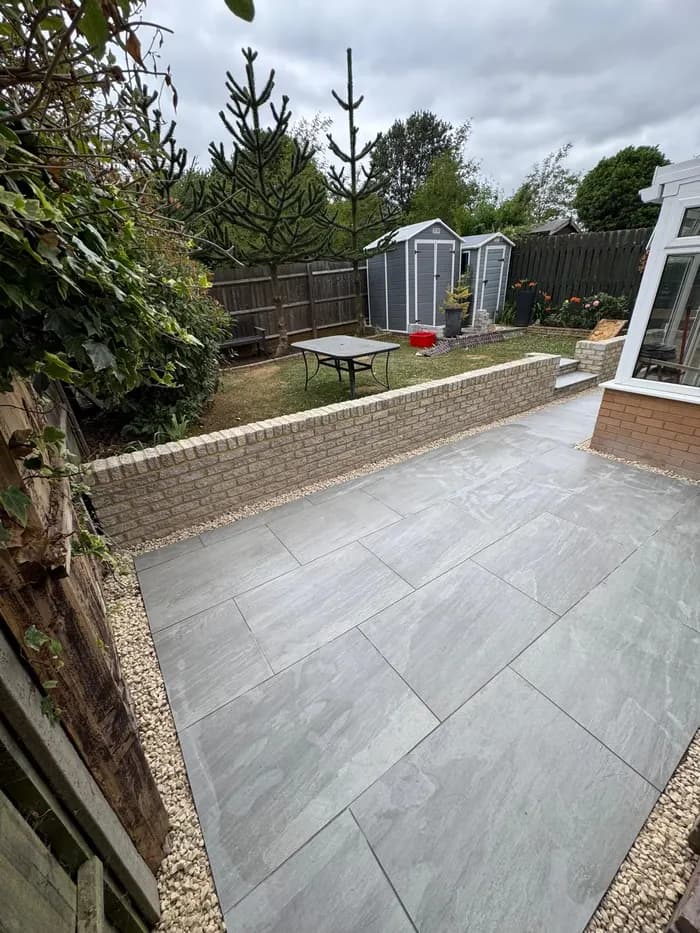
What a full renovation includes
Rather than tackling one patch at a time, a renovation looks at the whole garden. That usually means clearing the old layout, deciding where the sun falls and where you want to sit, then building the hard structure before any finishing touches go in.
- Site clearance and removal of old paving and shed bases
- Re-levelling, steps and retaining walls where the ground slopes
- Patios and seating areas in the right position for sun and shade
- Paths linking the house, lawn and outbuildings
- Garden walls, raised beds and planters in brick
- New lawn areas and borders ready for planting
Our process, step by step
It starts with a visit and a conversation about how the household uses the space. Families with young children often want a large flat lawn close to the house; others want low maintenance, a dining terrace, or a route down to a garden room or shed. George will be honest about what the plot allows.
Then the work is ordered so that nothing has to be redone. Drainage, walls and any change in level come first, because they set everything else. Patios and paths follow on properly compacted bases. Edging, steps and turf are left until the heavy work and machinery are finished, so the end result stays clean.
Dealing with slopes and drainage
Plenty of gardens around Northamptonshire fall away from the house or towards a neighbour. A sloping garden can be turned into a strength with terraces and short flights of steps, but the walls holding back soil have to be built properly, with foundations and drainage behind them. Getting water to run away from the house and off the patio is just as important as how the space looks.
Working in phases
Not every renovation has to happen at once. If budget or timing is a concern, we can plan the full design and build the structural parts first, adding later elements without undoing earlier work. Our garden renovation cost guide explains which choices have the biggest effect on the price.
Why homeowners choose us
Because we do both building and landscaping, one team handles the brick walls, paving and groundwork rather than several separate trades. George has 11 years of trading behind him, the business carries public liability insurance and work is backed by a 10-year guarantee.
Thinking about the garden long term
A renovated garden should still work in ten years. That means patios big enough for a growing family, paths wide enough for a mower or wheelbarrow, and materials that weather well rather than looking tired after a couple of winters. It also means thinking about storage, bins, outdoor taps and any future garden building, so space is left for them now rather than squeezed in later. We will talk these points through during the first visit so the design suits your household as it changes.
Questions worth asking at the first visit
Before work starts, it is useful to agree where spoil and materials will be kept, whether side access is wide enough for machinery, and which existing features such as trees, sheds or old walls are staying. It also helps to decide early whether you want outdoor lighting or power, because cables are far easier to run before paving goes down. Clear answers to these points keep the project moving and avoid changes halfway through.
Boundaries and surfaces
A renovation usually touches the edges of the garden as well as the middle. See fencing for new boundaries, and compare artificial grass with decking for low-maintenance areas.
Planning the layout first
A renovation goes more smoothly when the layout is worked out first. Our garden design page explains how levels, routes, lighting and features are planned before building.