
Why is my driveway cracking?
Cracks almost always point to movement below the surface. A sub-base that was too shallow or poorly compacted settles under the weight of cars. Clay soil swells when wet and shrinks in dry summers. Tree roots push up from below, and water getting in through an open crack freezes in winter and forces it wider. Edges that were never set in concrete let the surface spread and split along the sides.
A fine hairline crack may just be the surface ageing. Wide cracks, steps between pieces, or cracks with a dip beside them suggest the base has moved and needs attention.
Tarmac driveway repair
Tarmac turns brittle as it ages and the binder dries out, so it starts to fray, crack and lose stones. Small potholes can be cut out squarely and filled. Where the surface is crazed over a wide area, or has sunk in tyre tracks, the problem is usually the layer underneath, and a new surface laid on the old one will crack along the same lines.
Can a resin driveway be repaired?
Yes, in many cases. Small damaged patches can be cut out and refilled with matching resin and stone, though an exact colour match on an older, weathered surface is not always possible. Cracks in resin usually come from the base below it cracking, so if the base is sound the repair can last; if it is moving, the crack will return. Common resin driveway problems include loose stones from a thin or poorly mixed layer, cloudy patches from moisture during laying, and slow drainage from clogged pores. Our resin driveways page explains how a sound resin drive is built.
Block paving repairs
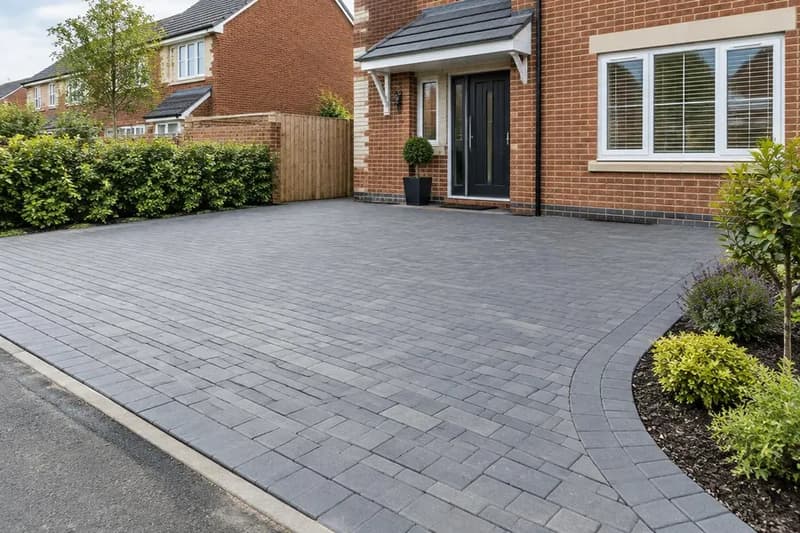
Block paving is the easiest surface to repair because the blocks can be lifted and reused. Sunken areas are taken up, the sand bed and sub-base underneath are corrected, and the same blocks go back in. Loose blocks along the edge usually mean the edging has failed and needs resetting in concrete. Empty joints are refilled with kiln-dried sand so the blocks lock again. Our block paving page explains how the system holds together.
Gravel driveway repair
Gravel drives suffer from ruts, bare patches where stone has been pushed aside, weeds and stone spreading onto the pavement. Raking and topping up only goes so far. A longer-lasting fix is often to regrade the base, add or replace firm edging, and lay a stabilising grid so the stone stays in place.
Repair or replace?
If the trouble is limited to one area and the rest of the drive is sound, a local repair makes sense. If the faults are spread across the whole drive, the base is too shallow everywhere, or water sits on the surface, rebuilding properly is usually better value over time. Our driveway cost guide explains what goes into a rebuild. For an honest view of your drive, send photos or ask for a visit through the contact page.