
Installation starts with digging out
Laying artificial grass straight onto old turf or soil is the most common shortcut and the reason many fake lawns go lumpy. The existing grass and topsoil are removed to a set depth, and the ground is levelled. A layer of crushed stone is then spread and compacted to give a firm, free-draining base, followed by a finer layer that gives a smooth bed for the grass.
A weed membrane is usually laid to stop roots coming through from below, and the grass is rolled out, cut to shape and fixed at the edges.
- Remove turf and topsoil
- Level and compact a stone sub-base
- Add a fine laying course
- Membrane, then grass
- Joins glued on tape and edges fixed
Edging keeps it neat
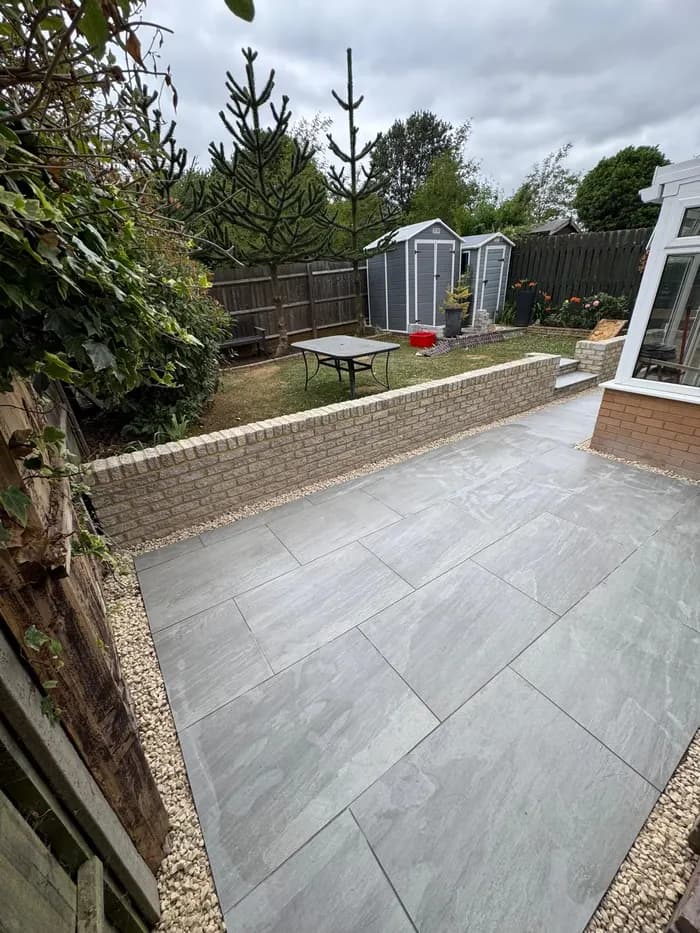
The edges are where artificial grass lifts first. A solid edge of timber, sleepers, brick or a fixed edging strip gives something to fix the grass to and stops the base spreading. Where the lawn meets a patio or path, a clean edge at the right height makes the two look like they were planned together, which is the kind of detail our landscaping work focuses on.
Drainage
Artificial grass has holes in its backing so rain can pass through, but the water still has to go somewhere. On heavy clay ground the stone base needs to be deeper, or the lawn needs a gentle fall towards a border or drain. Otherwise water sits under the surface and the grass feels soggy. Our garden drainage page covers why some gardens hold water.
What drives artificial grass cost
There is no fair price per square metre without seeing the garden, because the hidden work varies so much. The main factors are the area, how much soil has to be dug out and removed, the depth of stone base needed for your ground, the edging, the quality and pile height of the grass, and access. A garden reached only through the house takes longer than one with side access. Waste removal is also a real part of the cost, since a lot of soil comes out.
Shape matters too. A simple rectangle wastes little grass, while curves and many corners mean more cutting and more joins.
Artificial grass or real turf?
Real lawn is cheaper to lay and better for wildlife and cooling the garden, but needs mowing and care. Artificial grass suits shady corners where turf struggles, small courtyard lawns and families who want a clean surface all year. If you are weighing up a real lawn, our turfing cost guide explains that side, and decking is another option for a low-maintenance area.
Next step
Get in touch to talk through whether artificial grass suits your garden. Send photos and rough measurements through the contact page, and mention access and any wet patches.